
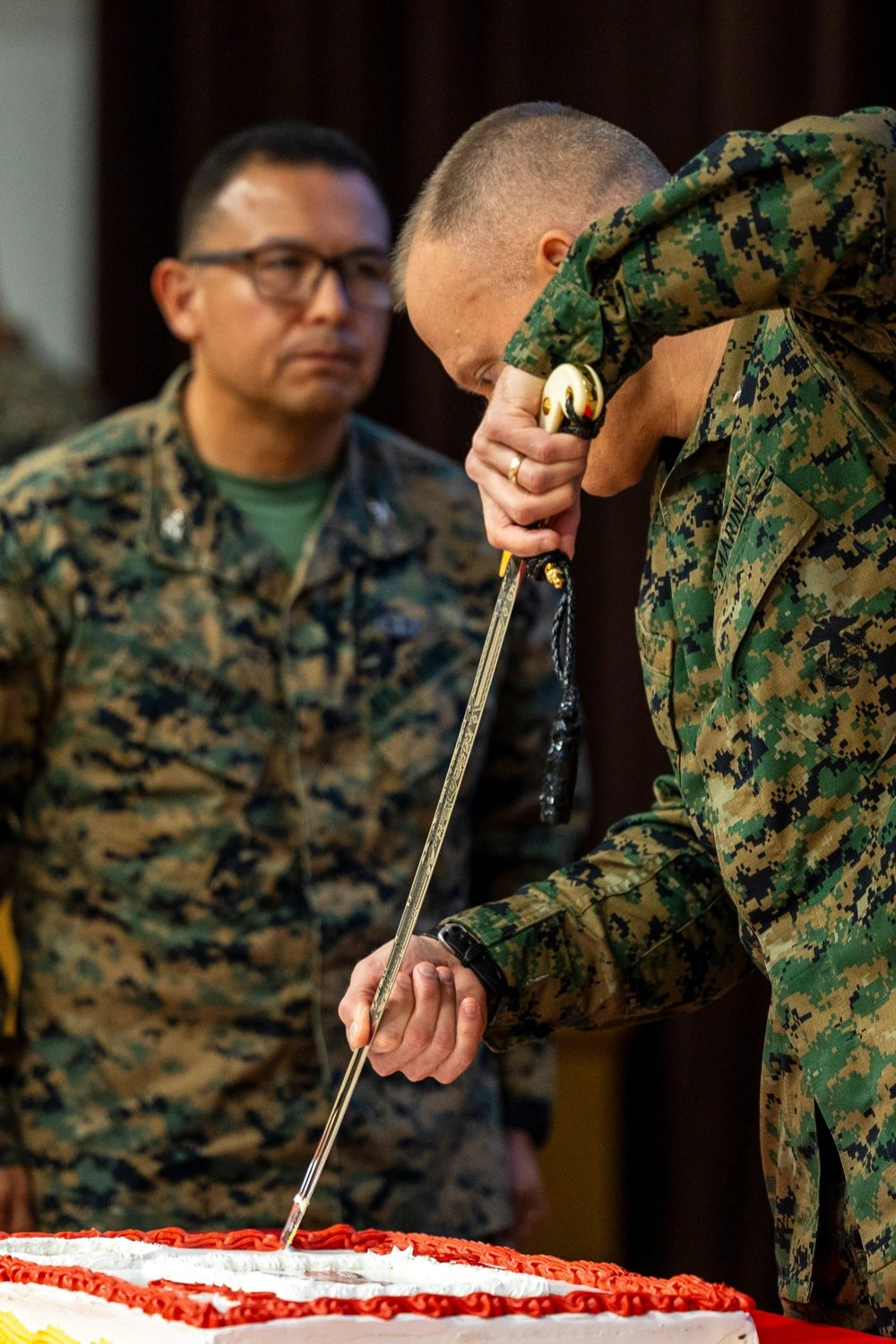
Every November, Marines celebrate a birthday with a scene that looks like someone let the armory plan dessert: a ceremonial sword comes out, a cake gets cut, and the oldest Marine in the room passes a slice to the youngest. It is formal, a little theatrical, and completely on brand.
With the Marine Corps birthday coming up on November 10, the obvious question is: how did cake become a miniature change-of-command ceremony? The answer is more interesting than “Marines like sharp objects.” The ritual connects a Revolutionary War origin story, a twentieth-century effort to build a shared birthday, and a message about who carries the Corps forward.
First, why November 10?
On November 10, 1775, the Continental Congress authorized two battalions of Marines. The modern Corps treats that date as its founding. But the birthday was not always celebrated on November 10: the Corps once observed July 11, tied to its 1798 reestablishment. A Marine Corps history of the birthday traces the shift to 1921, when Commandant Maj. Gen. John A. Lejeune made November 10 the annual occasion.
Lejeune’s order called for a message about the Corps’ history and service to be read across commands. That reading remains part of the observance today. Think of it as an annual reminder that the newest private is joining a story much older than the unit they reported to last week. The birthday is more than a party date on a calendar.
The cake came later
The sword-and-cake show was not handed down, fully formed, from Tun Tavern. Even Marine Corps historians do not pin down the first cake ceremony. A Marine Corps history in Semper Fidelis notes evidence of a ceremony at Quantico in 1935. It also describes a 1937 celebration at Marine Barracks Washington with a giant cake modeled after Tun Tavern. That is a better story than pretending somebody wrote the whole ritual on a napkin in 1775.
The formal birthday ball pageant appeared at Headquarters Marine Corps in 1951. The next year, Commandant Gen. Lemuel C. Shepherd Jr. directed a more consistent birthday celebration across the Corps and provided an outline for the cake ceremony. That outline eventually made it into the Drill Manual. The birthday itself reaches back to the Revolution; the familiar ceremony took shape much later.
Why cut a cake with a sword?
Because a normal cake knife would miss the point. The Marine Corps Drill and Ceremonies Manual describes a birthday cake arriving with a Marine sword—officer or noncommissioned officer—and the oldest and youngest Marines following the cake. The blade turns an ordinary dessert into a reminder of the service’s fighting heritage. It also makes the moment memorable even for the Marine standing in the back hoping there will be enough cake left.
That is not just interpretation after the fact. In an 11th Marine Expeditionary Unit account of a birthday at sea, a narrator explained that the NCO sword used to cut the cake represented Marines as a band of warriors. The specifics can vary, but the point is recognizable: even at a celebration, Marines make their identity visible.
Why does the oldest Marine hand cake to the youngest?
This is the part that sticks. The oldest Marine represents experience and continuity; the youngest represents the next generation. Passing the cake makes that handoff literal. A Headquarters Marine Corps account describes it as trust, confidence, and experience being handed forward. That is a lot of meaning to pack into one slice.
Do not get too hung up on an inflexible “first slice” rule, though. Marine Corps histories say early slices sometimes went to guests such as dignitaries or newlyweds. A Marine officer training outline gives the guest of honor a piece first, then has the oldest Marine share a piece with the youngest. Other ceremonies present the first slice to the oldest Marine. What matters is the exchange between generations, not winning an argument about which plate left the table first.
The exact time and place where that oldest-to-youngest custom began is unknown, according to the Corps’ own historical account. That uncertainty does not make the ritual any less real. It just means a neat origin legend would be less honest than the documented history.

It travels farther than the ballroom
The birthday is not limited to dress blues, polished floors, and a band. Marines have held the ceremony on ships and on deployment. In 2008, Marines with 1st Battalion, 4th Marines paused at Camp Baharia in Fallujah for their 233rd birthday; the Marine Corps account described a break from combat operations to keep the tradition. A Marine Corps Base Hawaii history even points out that a deployed celebration might use an MRE cookie in place of a proper cake.
That detail feels right. The point is not the frosting budget. Marines in very different places can stop for a minute, hear the same birthday message, and recognize the same lineage. A ballroom cake and a field-expedient cookie are doing the same job—though one is considerably easier on the knife.
Two days, two different reasons to remember
November 10 is the Marine Corps birthday. November 11 is Veterans Day, which honors veterans of all branches. They sit next to each other on the calendar, but they are separate observances. We recently dug into why Veterans Day was briefly moved to October; the Marine birthday’s date has its own story.
If you have never seen a birthday cake ceremony, watch for the small details: the sword, the reading, and especially the moment the oldest Marine turns toward the youngest. The cake will disappear in minutes. The message is meant to last longer. Like the Army’s enduring mule tradition, it is one of those military customs that can look odd from the outside and make immediate sense to the people who served.
Happy birthday to the Marines. May the cake be plentiful, the sword be clean, and the youngest Marine remember that someone just handed them more than dessert.
Featured photo: Brig. Gen. James Lively cuts the 2nd Marine Expeditionary Brigade’s 2025 birthday cake at Camp Lejeune. U.S. Marine Corps photo by Lance Cpl. John Allen via DVIDS. The appearance of U.S. Department of War (DoW) visual information does not imply or constitute DoW endorsement.