
Put a U.S. Army Soldier from 1996 next to one from 2026 and you probably would not need to be an expert to tell which one came from which era.
The woodland BDU is gone. Mirror-shined black boots are history. The three-event PT test that lasted for decades has been replaced. Basic training is concentrated at fewer installations. And an E-1’s monthly basic-pay number looks completely different.
Those changes did not happen overnight, and most were not simply the Army deciding it wanted something new. They reflect 30 years of war, research, technology, base closures, recruiting pressures and a gradual shift toward making equipment and standards more functional for Soldiers.
I did not join the Army in 1996. I shipped to Basic Training at Fort Benning in August 1999. That was close enough that much of the “1996 Army”—woodland BDUs, black boots and the APFT—was still the Army I entered.
Last fact-checked: September 7, 2026.
| Army in 1996 | Army in 2026 | |
|---|---|---|
| Fitness test | Three-event APFT | Five-event AFT; CFT also required for designated combat specialties |
| Combat uniform | Woodland BDU | Army Combat Uniform in Operational Camouflage Pattern |
| Combat boots | Black leather boots | Coyote brown combat boots |
| E-1 basic pay, 4+ months | $874.80 per month | $2,407.20 per month |
| Basic training locations | Six | Four |
1. Army fitness went from three simple events to a broader test of readiness
If you were in the Army in 1996, the PT test was brutally simple: two minutes of push-ups, two minutes of sit-ups and a two-mile run.
That was the Army Physical Fitness Test, or APFT. The Army used that three-event system from 1980 until the early 2020s. Its biggest advantage was simplicity. A unit could administer it almost anywhere with very little equipment. Its limitation was just as obvious: push-ups, sit-ups and a run measured only a narrow slice of the strength, power, agility and endurance Soldiers may need on the job. The Army spent years studying possible replacements.
The six-event Army Combat Fitness Test became the record test for Regular Army and Active Guard Reserve Soldiers on October 1, 2022. It added deadlifts, a standing power throw, hand-release push-ups, the sprint-drag-carry and a plank while retaining the two-mile run.
Then the Army changed it again. On June 1, 2025, the five-event Army Fitness Test, or AFT, replaced the ACFT. The standing power throw was eliminated, leaving the three-repetition maximum deadlift, hand-release push-up, sprint-drag-carry, plank and two-mile run.
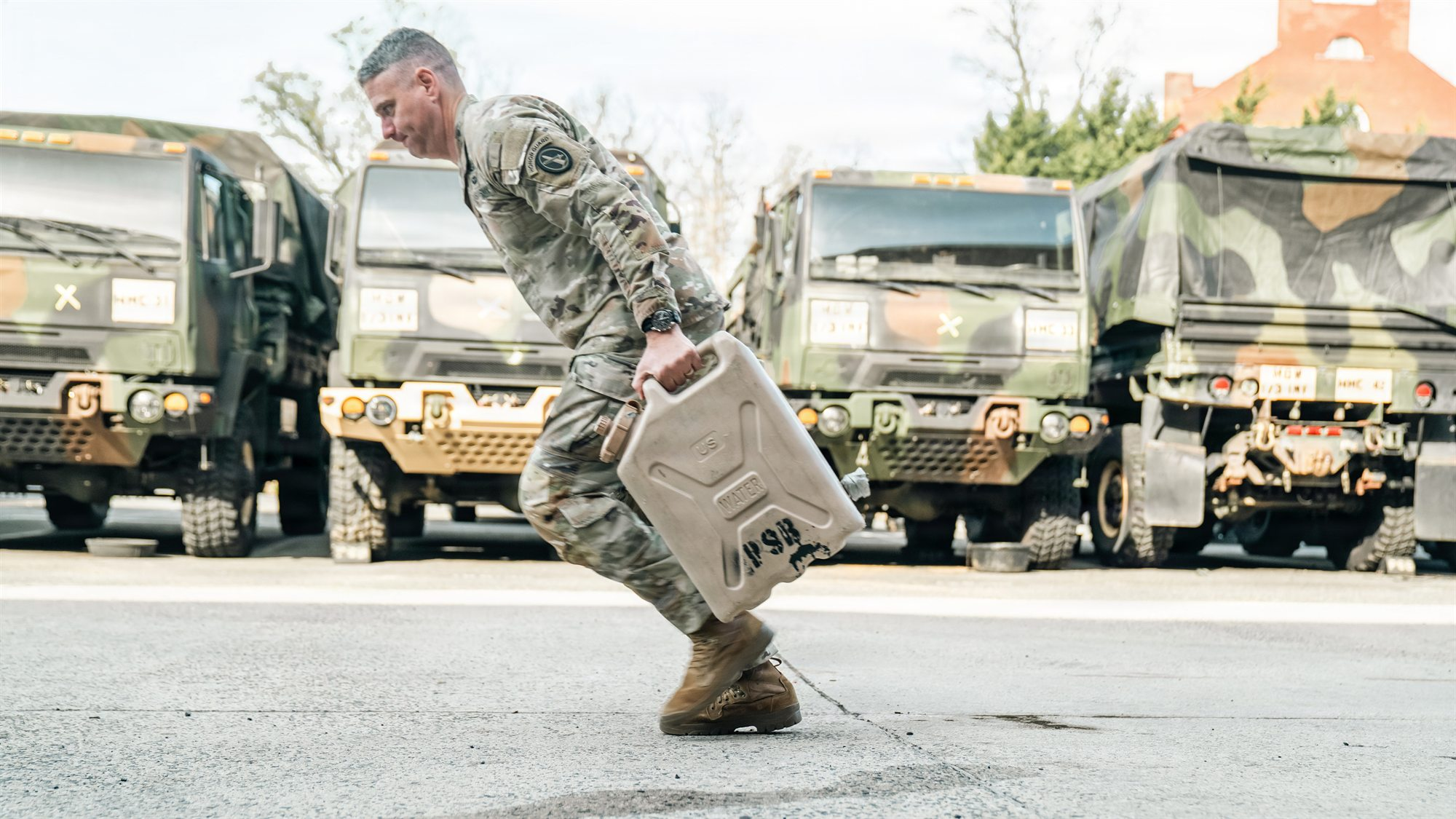
In 2026 the story gained another chapter. Army Directive 2026-07, signed April 17, established the seven-event Combat Field Test for Soldiers in 24 designated combat specialties. It is a continuous, pass-or-fail test performed in the Army Combat Uniform and boots. The events include two one-mile runs, dead-stop push-ups, a sprint, sandbag lifts, water-can carries and a high-crawl-and-rush movement drill.
The CFT does not replace the AFT. Regular Army, Active Guard Reserve and certain long-term active-duty Reserve Component Soldiers in those combat specialties will take both each year; other Reserve Component Soldiers in the designated specialties alternate between them. The directive also provides a one-year implementation period before a failed CFT alone can trigger adverse administrative action.
So the clean 1996-to-2026 comparison is three APFT events then versus five Army-wide AFT events now—but combat-specialty Soldiers have an additional field test. The larger change is what the Army believes fitness testing should answer. The APFT asked whether you could do push-ups, sit-ups and run. Today’s system is trying to measure whether Soldiers are physically prepared for the demands of their work.
If you need the current events and scoring standards, see what you need to pass the Army Fitness Test.
2. The woodland BDU disappeared—but it took two uniform changes to reach OCP
Few things say “1990s Army” as clearly as woodland BDUs.
The Army introduced the Battle Dress Uniform on October 1, 1981. The woodland pattern became one of the most recognizable looks in modern Army history and was firmly established by 1996.
The Army that went to war after September 11 exposed shortcomings in equipment designed for an earlier era. On June 14, 2004, the Army formally established the Army Combat Uniform, or ACU. The design incorporated easier-access pockets, hook-and-loop insignia and features intended to work better with body armor. The Army’s uniform history records the ACU as the replacement for both the BDU and Desert Camouflage Uniform.
The BDU reached its final Army wear-out date on April 30, 2008. But the Army did not go directly from woodland camouflage to the pattern Soldiers wear today.
The first ACU used the gray-green Universal Camouflage Pattern, or UCP. Soldier feedback and operational experience—especially in Afghanistan—helped drive another change. After extensive testing across different environments, the Army selected the Operational Camouflage Pattern, or OCP, for better concealment and force protection.
OCP uniforms became available beginning July 1, 2015. New Soldiers started receiving them in January 2016, and OCP became mandatory Army-wide on October 1, 2019.
One terminology note: Soldiers commonly call the uniform “OCPs,” but OCP is the camouflage pattern. The uniform itself is still the Army Combat Uniform.
The 30-year path is really woodland BDU → ACU with UCP → ACU with OCP. The first major change emphasized function and compatibility with modern combat equipment. The second focused heavily on concealment and survivability.
3. Black polished boots died with the BDU era
This may be the change old-school Soldiers notice more than almost anything else.
In the BDU Army, black leather combat boots were part of the look. They also came with something today’s Soldiers do not spend much time worrying about: keeping those damn things polished.
The ACU program replaced black boots with rough-out tan combat boots that did not require shining. Army historical records called out “no-shine desert boots instead of black boots” as one of the uniform’s significant changes. When the BDU reached its final wear-out date in 2008, the associated black combat boots went with it.
OCP changed the color again. Coyote brown combat boots became available during the 2015 transition and were part of the mandatory OCP combination by October 1, 2019.
Some veterans miss the appearance of a perfectly shined pair of black boots. I am willing to bet far fewer miss the actual process of getting them that way.

4. An E-1 made $874.80 a month in 1996. In 2026, it is $2,407.20.
This is probably the comparison that looks most shocking on paper, but it needs context.
The official 1996 military pay table lists an E-1 with at least four months of service at $874.80 per month in basic pay. An E-1 with less than four months received $809.10.
Effective January 1, 2026, those figures are $2,407.20 after four months and $2,225.70 during the first four months.
Those are basic-pay figures only. They do not include housing or subsistence allowances, special pays, health care or other parts of military compensation.
Unlike a uniform rollout, there was no single moment when E-1 pay jumped from the old number to the new one. Military basic pay normally rises every year. Unless Congress or the president sets a different figure, the annual adjustment is generally tied to private-sector wage growth measured through the Employment Cost Index.
One unusually large change arrived in 2025. The Defense Department’s 14th Quadrennial Review of Military Compensation notes that Congress approved a total 14.5% basic-pay increase for junior enlisted members amid recruiting concerns and reported food insecurity, compared with 4.5% for the rest of the force.
There is one more important caveat: $874.80 in 1996 and $2,407.20 in 2026 are nominal dollars. The comparison does not account for inflation or purchasing power. It would be misleading to say a private in 2026 is simply “almost three times better paid.”
What the numbers do show is how dramatically the pay table has changed over three decades—and how compensation keeps evolving as the military competes for people in a different labor market. For a closer look at what a new Soldier actually receives, read Army Private Pay: What New Soldiers Really Earn.
5. Six Army basic training locations became four
In 1996, the Army conducted basic training at six installations: Fort Benning, Georgia; Fort Jackson, South Carolina; Fort Knox, Kentucky; Fort Leonard Wood, Missouri; Fort McClellan, Alabama; and Fort Sill, Oklahoma. An Army medical reference describing the basic-training environment as of 1996 records all six.
Today the Army has four Basic Combat Training centers: Fort Benning, Fort Jackson, Fort Leonard Wood and Fort Sill.

Fort McClellan
The 1995 Base Realignment and Closure Commission recommended permanently closing Fort McClellan. The installation officially closed on May 20, 1999. Its Chemical School, Military Police School and Training Brigade relocated to Fort Leonard Wood, where those missions joined the Engineer School as part of the Maneuver Support Center. The Army Corps of Engineers’ Fort McClellan history records the closure and consolidation.
That was part of the wider post-Cold War base realignment happening across the military in the 1990s.
Fort Knox
Fort Knox lasted much longer as a training location. The 2005 BRAC process directed the Army’s Armor Center and School to relocate from Fort Knox to Fort Benning. The Armor School completed the move in 2011, joining the Infantry School to form the Maneuver Center of Excellence.
The logic was straightforward: infantry and armor fight together, so training them under one center made operational sense. Fort Knox remained an important Army installation, but it no longer served as one of the Army’s four Basic Combat Training locations.
If you are preparing to ship today, my guide to the four phases of Army Basic Training covers what the current training cycle looks like.
The Army did not just change its clothes
Looking at these five comparisons together tells a much bigger story.
The 1996 Army still carried many systems and traditions developed during the Cold War: woodland camouflage, black leather boots, a fitness test introduced in 1980 and a larger network of training installations.
The 2026 Army has been shaped by everything that happened afterward. More than two decades of deployments changed the way Soldiers dressed and equipped themselves. Research changed how the Army measures fitness. BRAC reorganized where Soldiers train. Changing economic and recruiting conditions influenced what the Army pays its newest troops.
Not every change has been universally loved. The Army spent years arguing over the ACFT. UCP became one of the most criticized camouflage patterns in recent memory. And plenty of old-school Soldiers still believe BDUs and black boots simply looked better.
That is also why comparing generations of the Army is fun. Some things disappear because they genuinely needed to go. Some things get replaced—and then the replacement gets replaced. And some Soldiers will argue that the old way was better until the end of time.
If you served back in the day, which change feels biggest to you? If you are serving now, which part of the 1996 Army are you happiest you never had to deal with?
Featured photo: Maj. Wes Strickland completes the water-can carry during a 2026 Combat Field Test trial at Joint Base Myer-Henderson Hall. U.S. Army photo by Sgt. Aaron Troutman/DVIDS.