
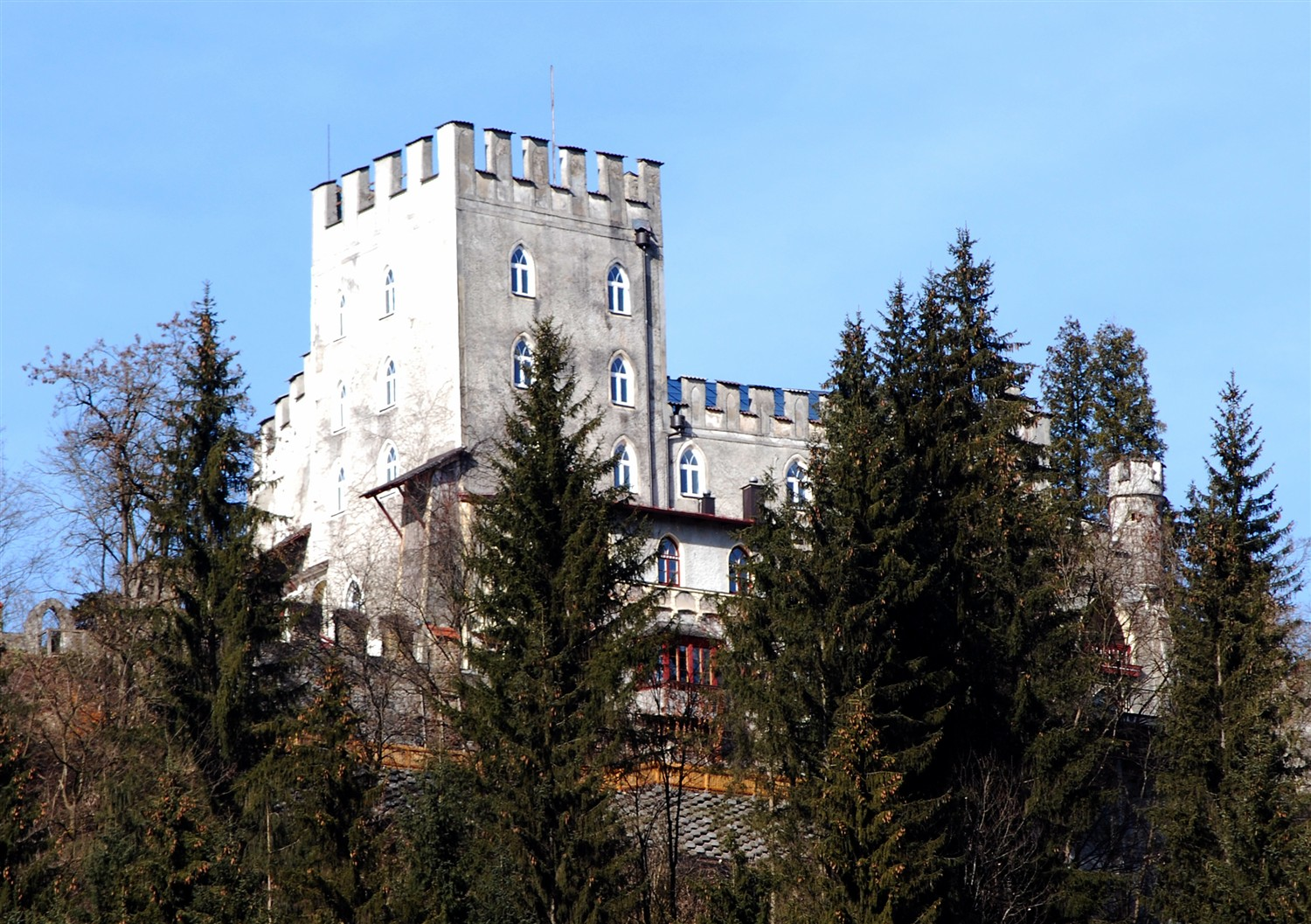
Imagine reaching the end of World War II, driving into an Austrian town, and hearing that French prisoners are trapped in a castle with SS troops on the way. Now imagine the German officer who tells you about it offers to help defend them. That sounds like a movie pitch somebody would reject for being too strange. On May 5, 1945, it happened at Castle Itter.
American soldiers, German troops who had turned against the Nazi regime, Austrian resistance members, and French prisoners held the castle against a Waffen-SS attack. The basic event is recorded even in the U.S. Army’s official history of the European war. The details make it one of the wildest stories of the final days in Europe.
Featured photo: Castle Itter in Austria, photographed in 2010. Photo by Svíčková via Wikimedia Commons, CC BY-SA 3.0. Resized for this article. This modern image shows the castle, not the 1945 battle.

A prison full of people the Nazis wanted to keep
Schloss Itter sits above a village in Austria’s Tyrol region. During the war, the SS used it as a special prison associated with the Dachau camp system. Its captives included former French prime ministers Paul Reynaud and Édouard Daladier, French generals, and tennis champion Jean Borotra. They were prominent prisoners, but prominence did not make their situation safe. The Wright Museum of World War II describes a garrison fading away as the Nazi state collapsed and armed SS units still moving nearby.
The prisoners needed help. One messenger left to seek American forces. A second reached Wörgl and found German Major Josef Gangl, who was working with local Austrian resistance members. Gangl contacted U.S. Army Capt. John C. “Jack” Lee Jr. of the 12th Armored Division. That is the point where a normal liberation story becomes something much stranger.
Jack Lee goes to the castle
According to a Chenango County Historical Society account based on Lee’s service record and the battle history, Lee first went to the castle with Gangl to see the prisoners for himself. He then returned with a small force. Roads, bridges, and scattered enemy troops made the trip anything but a straight drive. Lee’s men brought a Sherman tank up to the castle and parked it near the gate.
Lee had just been promoted to captain days earlier. He was also leading a mixed force that included Black American infantrymen serving in an Army that was still segregated. That part often disappears when the story is reduced to “Americans and Germans fought together.” The people involved were more varied, and the choices they faced were more complicated, than a catchy headline can hold.
Inside the castle, Lee and Gangl organized a defense with the Americans, German soldiers who had broken with the regime, and some of the freed French prisoners. This was a local decision to protect people under threat. It did not turn the Wehrmacht into an Allied force or erase its role in the war. That distinction matters.
One Sherman tank against the attack
SS troops attacked on May 5. Lee’s tank, nicknamed Besotten Jenny in some accounts and Besotted Jenny in others, guarded the entrance until anti-tank fire disabled it. The defenders kept firing from the castle as the assault continued. The historical society’s account says Gangl was killed during the battle, and that an American relief force arrived later that day. The Wright Museum describes the fight as a joint defense by American troops, German soldiers, Austrian resisters, and French captives.
Some retellings supply exact numbers of defenders, attackers, rounds, and hours. Those figures vary across accounts. The important documented sequence is clear: the SS attacked, the improvised garrison held, and American reinforcements reached the castle. The U.S. Army Center of Military History records that the former German garrison helped repel the SS and that its commander was killed.
For the French prisoners, the result was more than an unusual battlefield anecdote. A photograph taken in Innsbruck on May 6, 1945 shows several of them after liberation. It is an ordinary-looking group photo with an extraordinary day behind it.

The captain behind the strange headline
Lee received the Distinguished Service Cross. The citation reproduced by the historical society praises his initiative in entering hostile territory, organizing a defense with American and German troops, and holding out until friendly forces arrived. He did not have the luxury of waiting for a perfect plan or a familiar chain of command. He had prisoners in danger, a German officer offering help, and the forces he could gather.
That is why this story is worth more than the novelty of former enemies sharing a wall. Gangl and his men made a choice against the SS. Lee made a choice to go back for people he could have left for a larger force. The French prisoners and Austrian resistance members were active participants in their own rescue. Each part matters.
There is also a caution for anyone telling the story over a beer: the dramatic alliance was real, but it was exceptional. It does not support a myth that the regular German army was clean or broadly opposed to Nazi crimes. The castle was part of the wider Nazi prison system, and the SS threat was real. Keeping that context makes the courage at Itter clearer, not less interesting.
A last-days-of-war story that still surprises
The war in Europe was almost finished, but “almost” is a dangerous word when armed men are still moving through a valley. Castle Itter’s defenders got through one of those last battles by doing the immediate job in front of them: protect the prisoners and hold until help arrived.
If you like the Army’s stranger chapters, the Ghost Army’s inflatable tanks and the WWII bat-bomb experiment are also worth a read. Castle Itter belongs on that list, with one important difference: no one had time to invent a weird idea. They had to make a weird situation work.